

Trade Commodities CFDs
Diversify Your Trading Portfolio With The Most Popular Commodities

What is
Commodities CFDs Trading?
Trading commodities is one of the oldest forms of trading. When trading CFDs on Commodities you are essentially trading the value of these instruments and can speculate whether their value will rise or fall based on the supply and demand of these goods traded globally.

Why Traders Choose Commodities CFDs
Choice from a wide range of goods such as oil, gold, silver and platinum.
Trade goods that play a major role in global economies.
Diversification of portfolio.
Low margin requirements.
Why Traders Choose Commodities CFDs With M4Markets
-
 Assets
- $ 54, 8 4 7 . 3 0
- $ 54, 8 9 0 . 7 6
- $ 54, 0 2 3 . 9 4
- $ 54, 4 6 9 . 3 8
3.24% · -$1,023.95 Today
Dedicated charts for informed decision-making
Traders use these charts and their analysis tools to identify trends and patterns, ultimately supporting informed trading decisions.
-

Deep liquidity pool to ensure tight spreads
M4Markets benefits from a deep liquidity pool, enabling us to offer consistently tight spreads across a wide range of assets. This robust liquidity ensures efficient order execution and reduced trading costs, providing you with optimal pricing and enhanced potential trading success.
-

Intuitive trading platforms (MT4 & MT5)
Access the global markets with ease using M4Markets' intuitive and powerful trading platforms, MetaTrader 4 and MetaTrader 5. Both platforms offer a rich set of tools, advanced charting capabilities, and a user-friendly interface to suit traders of all levels, providing a seamless trading experience.
-
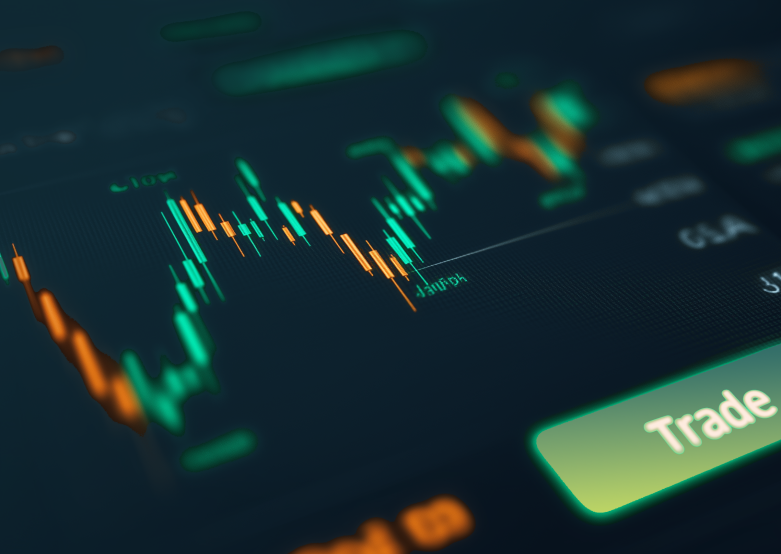

Ultra-low latency with superior execution
Benefit from lightning-fast trade execution and the assurance of no requotes, allowing you to trade with speed and price reliability.
-

Wide range of funding methods
Instant deposits and fast withdrawals and a variety of funding methods using established financial institutions.
-

Spreads from 0.0 pips and $0 commissions
This cost-efficient structure can help optimize your trading potential. Choose between our four account types and start trading.
OR try risk-free demo account
Trading CFDs involves significant risk of loss
Ready to Start Trading Commodities?
Follow our 3 easy steps to gain access to the most popular commodities globally.
-
Step 1: Select your Commodity
When trading CFDs on commodities, you do not own the underlying asset, but as an investor you can speculate on how the markets will react in respect to the commodity you are most interested in. We offer some of the most highly traded commodities which include Gold, Silver, Platinum, Brent Crude Oil and WTI Oil.
-
Step 2: Open your Position
Because commodities are affected by global events, they are also susceptible to sudden price movements so you need to start trading commodities by deciding if you want to go long (buy) or go short (sell), and start working on your risk management strategy.
-
Step 3: Close your Position
Once you’ve placed your trade, you will need to monitor your position. Your trade could be automatically closed based on your stop loss order or your take profit order, or you could decide to close the position if it’s not performing as you expected.
Trading CFDs involves significant risk of loss
3 Easy Steps to
Open Your Account
Ready to dive into the markets? Getting started with trading is a straightforward process.
-

Register & Verify Your Profile
Complete our registration form. Submit your KYC documents and complete your economic profile, upload the required documents and verify your profile. -
Open a Live Account & Fund it
Choose “Open Live Account” under the Accounts tab and select an account. Click “Deposit funds” under the funds tab to select your funding method. -
Download Your Platform & Get Started
Choose “Downloads” tab under Trader’s Menu and download your preferred platform. Launch your platform and start trading.
Trading CFDs involves significant risk of loss
Frequently Asked Questions about
Commodities CFD Trading
-
How does commodity CFD trading work?
Commodity CFD trading allows you to speculate on the price movements of a wide range of commodities without owning the physical goods. When you trade a CFD, you enter into a contract with a broker to exchange the difference in the value of a commodity, such as oil or gold, between the time you open a position and the time you close it. This means you can go long or short, profiting from rising or falling prices. Understanding how CFDs work is the first step, as they are fundamentally different from buying assets outright in the financial markets.
-
What makes trading commodity CFDs a high-risk activity?
CFDs are complex instruments, primarily due to the use of leverage. Leveraged trading allows you to control a large position with a small initial deposit, which can amplify profits. However, it also magnifies losses, creating a high risk of losing money. In fact, the potential to lose money rapidly due to leverage is significant, which is why so many retail investor accounts lose money when trading. The volatility of commodity markets—such as the energy markets—further increases the risk, so a thorough understanding is essential before committing capital.
-
What range of commodities can I trade with CFDs?
One of the main benefits of trading commodities with CFDs is access to diverse markets from a single trading account. This includes:
- Precious Metals – Speculate on metals such as gold and silver.
- Energies – Trade key components of the global commodities landscape, including crude oil and natural gas.
- Soft Commodities – Gain exposure to agricultural products like coffee, sugar, and cotton.
This variety provides numerous trading opportunities across different sectors of the global economy.
-
What tools do I need for effective online commodity trading?
Having the right tools may increase your chances of trading more effectively in commodity markets. A reliable web trading platform or mobile app can help you execute trades and monitor market movements. A CFD account that includes advanced chart types and technical indicators can assist in analyzing trends and generating trade ideas. Some traders also choose to follow trading signals to identify possible entry and exit points, particularly in fast-moving markets such as gold, silver, or oil.
-
When can I trade commodities, and what affects their prices?
Trading hours for commodities depend on the specific asset and the exchange where it is traded, but many key markets are open around the clock, five days a week. Commodity prices are influenced by various factors, including global supply and demand, geopolitical events, weather patterns, and the strength of major currencies. For example, gold is often viewed as a safe-haven asset during economic uncertainty, while oil prices are heavily influenced by OPEC decisions and global industrial output. Staying informed about these drivers is essential for spotting trading opportunities.
Connect With Our Experts Anytime
Not sure where to find what you need?
Simple answers to popular questions are found in our Support Center.